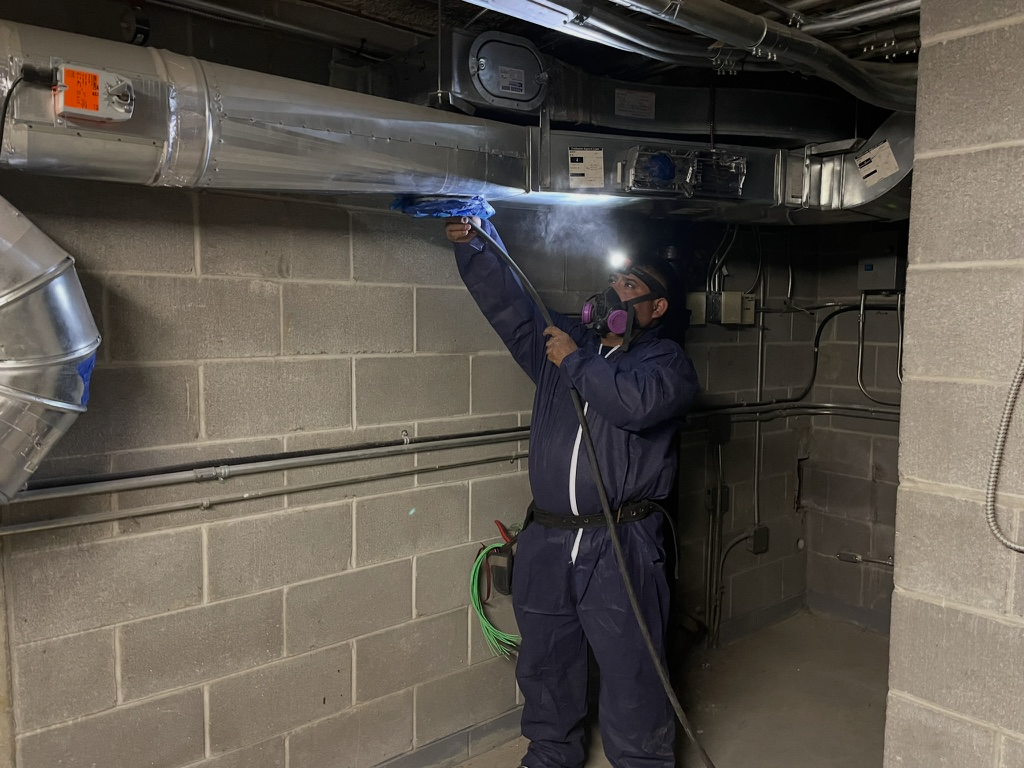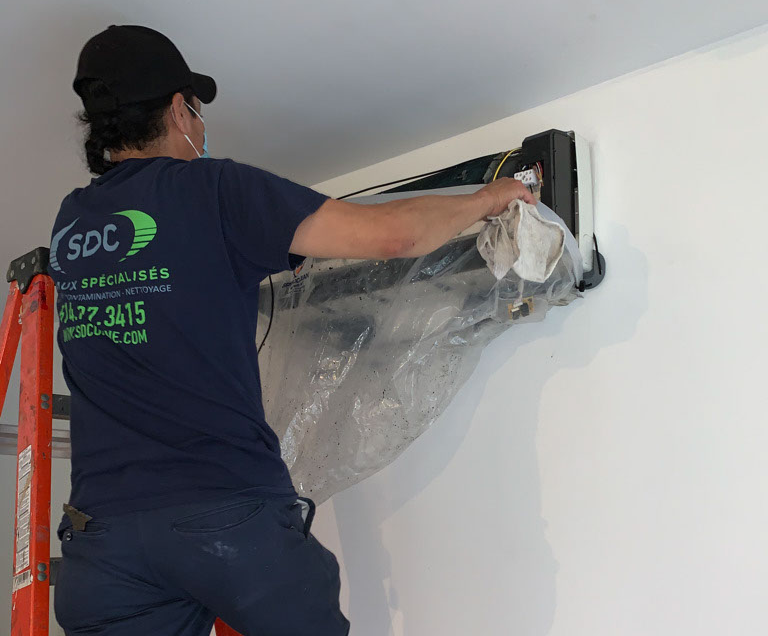


Having a ventilation duct cleaned helps improve indoor air quality, support system performance, and limit the buildup of dust, debris, and contaminants in the building. When the ductwork is dirty, the air circulating through it may carry more particles than it should, which affects occupant comfort and the proper operation of the system.
People often think about floors, visible surfaces, and filters, but much less often about the actual condition of the ducts. Yet these ducts play a central role in air circulation. Over time, they can accumulate dust, allergens, renovation residue, moisture, or other particles that eventually affect the indoor environment. In a residential, commercial, or institutional building, professional duct cleaning is not a luxury. It is a preventive maintenance measure that helps keep the system cleaner, more efficient, and better maintained.
Why is cleaning a ventilation duct important?
Cleaning a ventilation duct is important because dirty ductwork can reduce indoor air quality and system efficiency. The more residue builds up in the ducts, the more likely it is that these particles will be redistributed into the rooms where people live or work.
A ventilation system runs continuously, or nearly so. It draws in, pushes, and redistributes air according to the building’s needs. If the ductwork is loaded with dust or debris, that circulation no longer happens under optimal conditions. This can lead to a general sense of discomfort, heavier-feeling air, dust returning quickly to surfaces, or greater strain on the equipment.
Dirty ductwork affects indoor air quality
When dust builds up inside ducts, some of it can become airborne again when the system is running. That does not mean every indoor air quality issue comes from the ducts, but dirty ductwork can clearly contribute to a less healthy environment.
Residue buildup can affect occupant comfort
Air with more particles in it can increase certain discomforts. This may show up as dust returning quickly, air that feels less fresh, or an environment that seems heavier than usual.
Proper ductwork maintenance helps preserve system performance
Clean ducts support smoother airflow. On the other hand, heavily soiled ductwork may force the system to work harder to maintain the same level of ventilation.
What are the signs that a ventilation duct should be cleaned?
Several signs may indicate that cleaning has become relevant, such as persistent dust, unusual odours, or less effective airflow. In many cases, it is not a single sign that matters, but the buildup of several signals at the same time.
It is rare for a duct to clearly “announce” its condition. The signs are often indirect. That is why it is useful to know how to recognize the situations where a professional assessment becomes the logical next step.
Dust comes back quickly after cleaning
If surfaces become dusty again quickly despite regular cleaning, it may be worth checking whether part of the issue is coming from the ventilation system. Dirty ducts can contribute to redistributing particles throughout the building.
Odours or less pleasant air appear when the system starts
An unusual smell when the system starts, a sense of stale air, or an environment that feels less comfortable may justify an inspection. These signs do not automatically prove that cleaning is necessary, but they should attract attention.
The building’s context justifies an inspection
Certain situations clearly increase the risk of buildup:
- recent renovations
- construction dust
- moisture or infiltration
- increased particle presence in the environment
- neglected maintenance over a long period
Wondering whether your ducts should be checked?
Visit our commercial air duct cleaning page to see in which situations professional service is recommended.
Why is cleaning especially useful after renovations?
Cleaning is especially useful after renovations because construction work generates a large amount of fine dust and debris that can end up in the ducts. If those residues remain in the system, they may continue to circulate in the air long after the project is finished.
Even small jobs can generate a lot of particles. Drywall cutting, plaster, sawdust, sanding, concrete dust, paint residue, or other material debris can all easily enter the ventilation system. Once the renovations are complete, the building may appear clean on the surface while some of the contaminants are still hidden inside the ductwork.
Construction particles easily make their way into the system
During construction work, air returns and ventilation openings can pull in very fine particles without this being immediately visible. These residues then settle in the ductwork.
Waiting too long prolongs the presence of dust in the air
The longer this debris is left in the ducts, the more time it has to be recirculated when the system operates. Post-renovation cleaning helps you start again on a cleaner basis.
Comfort returns more quickly when the ductwork is clean
After construction work, the goal is often to get back to a normal environment as quickly as possible. Duct cleaning can be one of the useful steps in restoring more pleasant indoor air.
How often should ventilation ducts be cleaned?
The frequency depends on the type of building, occupancy level, indoor environment, and special events such as renovations. There is no single schedule that works for every case, but many property owners use periodic cleaning as a preventive maintenance measure.
In a well-maintained building, the intervals may be longer. In an environment more exposed to dust, moisture, or heavier activity, it may be relevant to check the ductwork sooner. The important thing is not to clean too often, but not to wait until the buildup becomes problematic.
There is no single frequency that applies to everyone
A small residential building, a commercial space, and a more complex property do not have the same needs. The right schedule depends on the reality of the site.
Some situations justify faster cleaning
Cleaning may be recommended sooner in cases such as:
- recent renovations
- dust returning quickly
- poor perceived air quality
- insufficient maintenance history
- signs of moisture or heavy buildup
An assessment remains the best way to know when to act
Rather than guessing, an inspection can determine whether the ductwork actually needs cleaning. This is often the most logical way to avoid both unnecessary cleanings and waiting too long.
How much does ventilation duct cleaning cost?
The cost of ventilation duct cleaning varies depending on the size of the system, its accessibility, the type of building, and the level of buildup. There is no single price that applies to every situation.
That is precisely why searches such as how much does ventilation duct cleaning cost or ventilation duct cleaning price are so common. People want to know what to expect, but the reality is that the price always depends on the context.
What factors influence the price?
Several factors can affect the price:
- system size
- number of ducts or vents
- accessibility of the installations
- the type of building
- the level of soiling
- complexity of the intervention
Why the same service does not cost the same everywhere
Two buildings may seem comparable without actually being so. A simple, easily accessible system will take less time than a larger, older, or more difficult network to treat.
Why a quote is still the best place to start
A quote gives you an estimate aligned with the reality of the site. To explore this topic further, you can visit our page dedicated to ventilation duct cleaning costs, which explains in more detail the factors that influence pricing.
Want to know how much an intervention could cost in your building?
Check out our pricing resource or contact SDC for an estimate tailored to your situation.
Why hire a professional instead of cleaning it yourself?
Hiring a professional is often the best solution because a ventilation system is complex, difficult to access, and impossible to clean thoroughly with household tools. DIY maintenance can improve some visible elements, but it generally does not make it possible to treat the entire system properly.
Many property owners think that good cleaning around the vents or simply changing the filter is enough. These steps are useful, but they do not replace a complete mechanical cleaning carried out with the right equipment.
The limits of DIY cleaning
In most cases, you can clean visible vents and maintain filters, but you cannot access the deeper sections of the system. Most of the network remains out of reach.
Professional service relies on specialized equipment
A complete cleaning generally requires the right tools to dislodge particles, vacuum them properly, and treat the system without spreading dirt throughout the building.
A specialist can reach deeper into the system
One of the main benefits of hiring a professional is their ability to assess the full network, identify the areas that need treatment, and adapt the method to the building’s actual layout.
How does professional ventilation duct cleaning work?
Professional cleaning usually follows three steps: assessment of the ductwork, mechanical cleaning with the appropriate equipment, and final verification. This approach makes it possible to treat the system in a structured way rather than working at random.
The exact details may vary depending on the building, but the goal remains the same: to clean more thoroughly and more precisely than routine maintenance could achieve.
1. Initial assessment and system inspection
Before starting, it is necessary to understand the network layout, its overall condition, the available access points, and the site constraints. This step makes it possible to choose a consistent method.
2. Mechanical cleaning with the right tools
The cleaning itself relies on a combination of techniques used to remove particles that have accumulated inside the network. This is the phase that makes it possible to go beyond basic surface cleaning.
3. Final verification and recommendations
Once the work is complete, a verification step confirms the condition of the system and, where needed, helps recommend a maintenance frequency or other relevant measures.
What practical benefits can be expected after cleaning?
The expected benefits are generally cleaner indoor air, better airflow, and a better-maintained system. Exact results vary depending on the building, but these three gains are among the most sought after.
Beyond the technical side, the goal remains simple: to make the building more comfortable and the system more consistent with good preventive maintenance.
Cleaner, healthier, and more pleasant indoor air
A network with less dust and residue contributes to a cleaner environment that is often more pleasant for occupants.
Better airflow
When buildup decreases, the system can operate under better conditions. This can help restore smoother airflow.
More consistent building maintenance
Duct cleaning is part of a broader building management approach. It helps better control dust and maintain a more rigorous level of upkeep throughout the space.
Looking for a partner to better maintain air quality in your building?
Discover all of our services on the SDC Travaux Spécialisés homepage or contact our team to speak with a specialist.
Complementary services can be carried out at the same time
In commercial and industrial buildings, ventilation duct cleaning can be combined with other specialized services such as mould decontamination, asbestos decontamination, post-disaster cleanup, or dry ice blasting. Entrusting this work to a single certified provider simplifies coordination, improves site follow-up, and can also help keep overall costs under better control.
Frequently asked questions about ventilation duct cleaning
Why does cleaning a ventilation duct improve air quality?
Because a clean network contains less dust, debris, and particles that could otherwise be redistributed into the indoor air when the system is operating.
How much does ventilation duct cleaning cost?
The cost varies depending on the size of the system, its accessibility, the type of building, and the condition of the ducts. A customized quote remains the best way to get a realistic price.
Is cleaning recommended after renovations?
Yes, it is often one of the most relevant times to proceed. Construction work generates a great deal of fine dust that can end up in the ducts.
How often should ducts be cleaned?
There is no single universal frequency. In many cases, periodic maintenance and an assessment at the right time help keep the system in good condition.