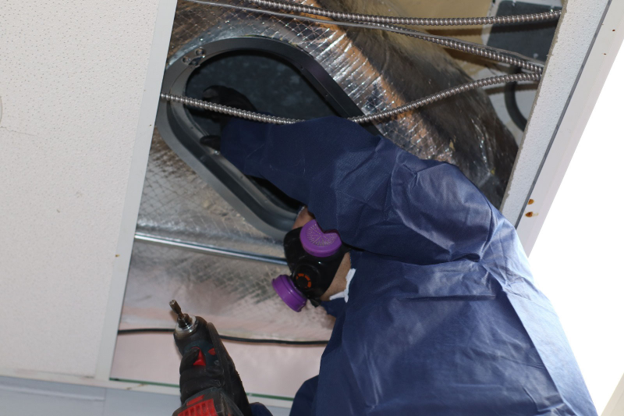


. . A commercial building asbestos register brings together the information needed to locate inspected materials, document the presence or absence of asbestos, and plan work that could generate asbestos dust. The register should not be treated as a one-time inventory. It supports ongoing building management, periodic inspections, renovations, repairs, and work involving asbestos-containing materials. In Quebec, the employer must create and maintain an up-to-date register that includes the location of inspected materials, inspection results, sampling reports, and completed work. The register must be retained for as long as the building or structure remains under the employer's authority. SDC Travaux Spécialisés .travaux de nettoyage et de décontamination spécialisésparticularly when asbestos-containing materials must be removed before renovation or demolition work.
What Is an Asbestos Register and What Is It Used For?
Le registre d’amiante est un outil de gestion sécuritaire de l’amianteAn asbestos register is a tool for safe asbestos management. It centralizes the information an employer, building manager, or contractor needs before carrying out work in a commercial building.
A complete asbestos management register helps determine:
- where inspected or assessed materials are located;
- whether they contain asbestos and, when applicable, the type identified;
- the condition of the relevant flocking and heat insulating materials;
- when inspections and laboratory analyses were completed;
- what work has already been performed;
- what information must be communicated before work begins.
This information reduces the risk of suspect materials being drilled, cut, sanded, moved, or demolished before their composition has been verified. For more information about the hazards, affected materials, and work methods, read our guide todécontamination de l’amiante.
Safe Asbestos Management and Worker Protection
Asbestos primarily becomes a hazard when asbestos fibres are released into the air. Asbestos dust may be generated when an asbestos-containing material is damaged or disturbed during work. Before work that could generate dust begins, the employer must verify whether asbestos is present and determine its type. Depending on the nature of the work, preventive measures may include wetting materials, ventilation, containment, protective clothing, and appropriate respiratory protection. The register therefore helps protect workers’ health and reduce the risk of exposure by making the necessary information available before work begins. It also helps define the scope of a tender, select suitable work methods, and coordinate the various parties involved. protection de la santé des travailleurs en rendant accessibles les informations nécessaires avant le début des travaux. Il aide également à définir la portée d’un appel d’offres, à choisir les méthodes appropriées et à coordonner les différents intervenants.
Asbestos Register Requirements in Quebec Since June 2013
Quebec's provisions governing safe asbestos management and asbestos registers came into force on June 6, 2013. Section 69.16 of the Regulation respecting occupational health and safety, commonly referred to by its French acronym RSST, sets out the information and documents that the employer must retain. The requirement is not limited to materials confirmed to contain asbestos. The register must also include verifiable documentary information or reports demonstrating the absence of asbestos in inspected or assessed materials. An Excel spreadsheet, PDF, or digital platform may be used to maintain the register. The chosen format must preserve the required information, make locations easy to identify, and keep relevant records accessible to the people who need them. 6 juin 2013. . .
Who Is Responsible for a Commercial Building Asbestos Register?
Under the RSST, the l’employeur is responsible for preparing and maintaining the asbestos register for every building or structure under its authority. The building owner, property manager, maintenance supervisor, and occupational health and safety manager may contribute to collecting and organizing the information, but this collaboration does not automatically transfer the employer's regulatory responsibility. In a property occupied by several tenants or employers, responsibilities and communication procedures should be clearly defined. The register must remain usable by the people planning the work and by those who could be exposed.
Responsibilities of the Employer and Building Owner
. . . . The employer must ensure that the required inspections and assessments are completed, supporting documents are retained, and work involving asbestos-containing materials is recorded. Any building constructed before February 15, 1990, must be inspected to locate asbestos-containing flocking. Any building constructed before May 20, 1999, must be inspected to locate asbestos-containing heat insulating materials, often referred to as pipe lagging. The employer is responsible for locating these materials in buildings under its authority. These dates apply specifically to flocking and heat insulating materials. They do not mean that every other material installed after those dates is automatically asbestos-free. When a building owner delegates day-to-day property management to another organization, reports, plans, and results should be transferred in a way that preserves continuity of records. The asbestos register must reflect the building's current condition even when property managers, tenants, or contractors change.
For a house, condominium, or small multi-unit residential building, see our page on residential asbestos decontamination..
Register Access for Workers, Managers, and Contractors
The employer must make the register available to workers and their representatives at the establishment. The employer must also disclose the relevant entries to anyone planning or performing work that could generate asbestos dust.
Effective communication before work generally involves four steps:
- identify the rooms, equipment, and materials that may be affected;
- review the relevant asbestos register entries;
- provide contractors with the results, plans, and required precautions;
- inform workers who may be exposed.
A general statement that "the building contains asbestos" is not precise enough to plan the work safely. The parties involved must be able to identify the affected materials, their locations, and the control measures to be incorporated into the work procedure.
Prepare the Asbestos Register Before Work Begins
Send SDC the relevant plans, laboratory reports, and material locations to support project assessment and safe worksite planning.
Submit Your Commercial Asbestos Abatement Project
A useful asbestos register should show which materials were assessed, where they are located, and what precautions are required before work begins.
Which Materials Must Be Included in an Asbestos Register?
The register must document inspected flocking and heat insulating materials, as well as other materials and products that have been assessed. Their location, the conclusion regarding the presence or absence of asbestos, and the supporting documents must remain traceable. A material likely to contain asbestos is not automatically asbestos-free simply because it appears intact. Its composition must be established before work that could generate dust is undertaken. . .
Flocking, Heat Insulating Materials, and Other Materials Likely to Contain Asbestos
The RSST defines flocking as a mixture of friable materials applied to a surface by spraying. A heat insulating material is insulation that covers a facility or equipment to prevent heat loss.
Dans un bâtiment commercial, les matériaux à vérifier peuvent notamment comprendre :
- flocking on ceilings, structural components, or technical surfaces;
- heat insulating materials on pipes, elbows, boilers, and piping;
- plaster, parging, stucco, and some joint compounds;
- vinyl tiles, adhesives, and other floor coverings;
- panels, pipes, and fibre-cement products;
- certain insulation products, architectural finishes, and mechanical materials.
. . The exact list depends on the building's age, previous renovations, and the components that will be disturbed. The CNESST identifies interior finishes, plaster, render, stucco, insulation, and vinyl tiles among the materials that may contain asbestos. Under the RSST, gypsum board and joint compounds manufactured after January 1, 1980, are presumed not to contain asbestos. When this exception is used, reliable documentation should support the manufacturing date. When a fire, water loss, or other incident damages suspect materials, asbestos assessment should be coordinated with disaster cleanupMould growth is a separate issue. When mould is also present, a separatecommercial mould remediation peut être nécessaire.
Inspection, Sampling, and Laboratory Analysis
A material's appearance generally cannot confirm its composition. For flocking and heat insulating materials, the absence of asbestos may be demonstrated through verifiable documentary information or a report based on a sufficient number of representative samples. When these materials are sampled, the report must identify the person responsible for the sampling report, list the samples and their locations, provide the analysis report and method used, and identify the laboratory and the interlaboratory quality control program in which it participates. Analyses must follow a method specified in the IRSST guide or another method offering equivalent accuracy. The laboratory must participate in an interlaboratory quality control program. The IRSST’s CQ Vrac list identifies laboratories recognized for asbestos analysis in bulk materials. Quebec's asbestos provisions apply when a material or product contains at least 0.1% asbestos..
What Must an Asbestos-Containing Materials Register Include?
The minimum content of an asbestos-containing materials register is established by section 69.16 of the RSST. The register must provide a clear record of inspection history, assessments, results, and completed work. It may be organized by building, floor, room, technical area, or mechanical system, provided that every location can be identified without ambiguity.
Location, Material Condition, and Analysis Results
The asbestos register must identify the location of inspected flocking and heat insulating materials, as well as other assessed materials and products. It must also state whether asbestos is present, identify its type when applicable, or document its absence using supporting information or sampling reports. It must include the dates and results of inspections involving asbestos-containing flocking and heat insulating materials, together with the results of other assessments completed on materials and products. To make the register easier to use, each entry may be connected to a floor plan, photograph, room number, piece of equipment, or specific building component. Material condition should also be documented as part of ongoing monitoring. When flocking, heat insulating material, or an interior finish may generate dust because of its condition, the employer must implement the appropriate corrective measures.
Completed Work, Corrective Measures, and Building Plans
After repair, encapsulation, enclosure, or removal, the asbestos register must indicate the nature and date of the work completed on asbestos-containing materials. Supporting documentation may identify the affected area, materials involved, responsible contractor, analysis results covered by the scope of work, and changes that should be transferred to building plans. The contractor performing the work may provide the agreed project documentation to the client. However, responsibility for adding this information to the register and keeping the register current remains with the employer. Clear traçabilité des interventions prevents a material that has already been removed from continuing to appear as present. It also reduces the risk of repairs or corrective measures being overlooked when a future project is prepared.
Biennial Inspections and Asbestos Register Updates
Asbestos-containing flocking and heat insulating materials must be checked during the initial inspection and every two years afterward. An exception applies when they are entirely enclosed in a permanent structure resistant to fibres and cannot be accessed without a destructive operation. This two-year inspection frequency is not a general rule for every material listed in the register. It applies specifically to asbestos-containing flocking and heat insulating materials covered by section 69.8. The register must also be updated whenever a new inspection, analysis, change in material condition, repair, or removal changes the available information. The employer must retain the register for as long as the building or structure remains under its authority.
Gather the Information Needed Before Your Project
Organize the reports, plans, photographs, and site records needed to assess the scope of work accurately.
Send Your Project Documents to Our Team
An asbestos register should be updated whenever an inspection, analysis, or intervention changes the information available.
Must the Register Be Reviewed Before Renovation or Demolition?
Yes. Before work that could generate dust, the employer must verify whether asbestos is present in the materials that may be affected. Relevant asbestos register entries must be communicated to the people planning or performing the work. The register is a starting point. Additional assessment is still required when the affected area has never been inspected or when the available documentation does not support a reliable conclusion.
What Should You Do If Asbestos Is Discovered During Work?
As a preventive measure, the task disturbing the material should be stopped and the area protected to limit further dispersal of asbestos dust. The building manager should then arrange for the material to be assessed and determine the control measures required before work resumes. The CNESST requires the presence and type of asbestos to be verified before work that may generate dust. It may order work to stop when essential preventive measures are not being applied. The discovery, laboratory results, and corrective work must then be recorded in the asbestos register.
Plan Your Commercial Asbestos Abatement Project
A well-documented register supports material assessment, worksite preparation, and coordination among the parties involved. View . réalisations de SDC to see examples of specialized work.